

Animal Healthcare Market Overview
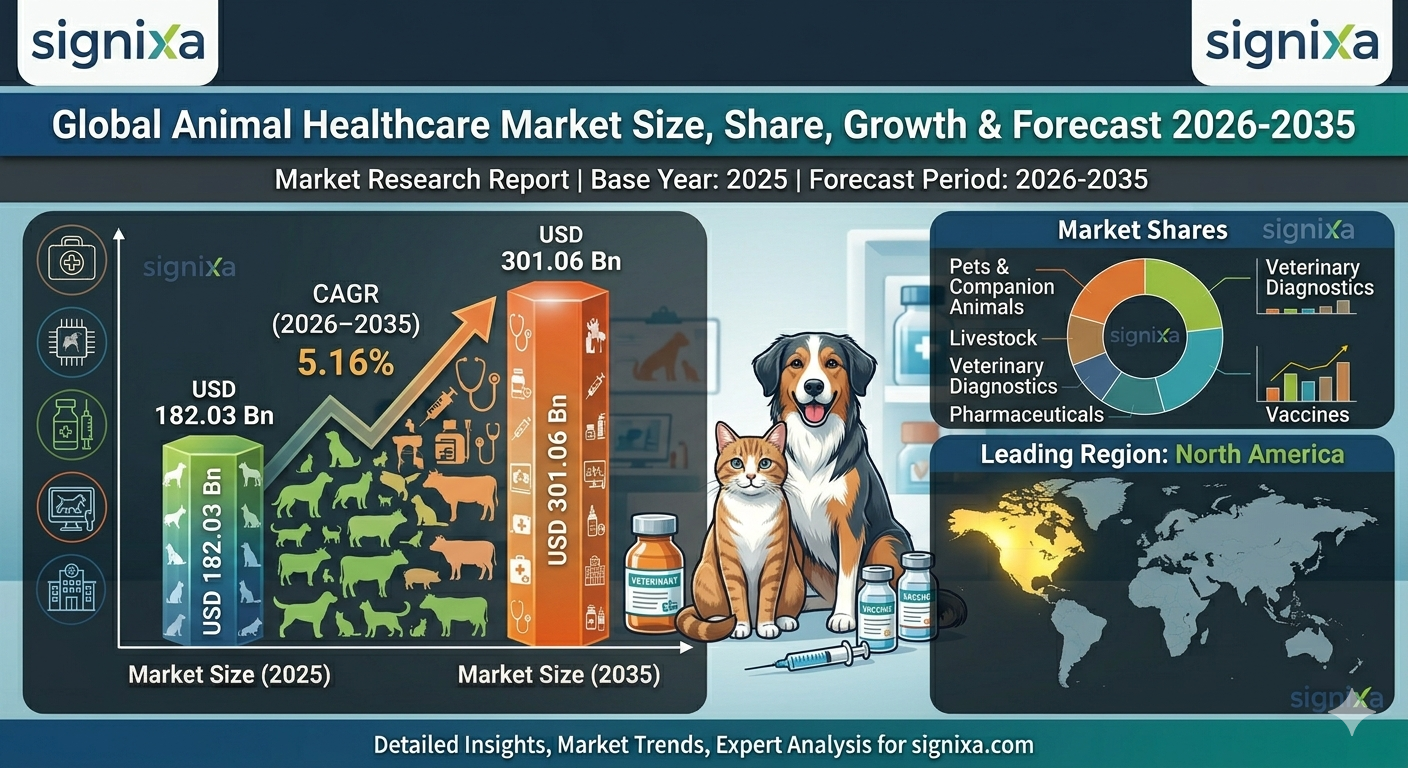
The size of the global Animal Healthcare market was worth around USD 182.03 Billion in 2025 and is predicted to grow to around USD 301.06 billion by 2035, with a compound annual growth rate (CAGR) of roughly 5.16% between 2025 and 2035. The report analyzes the Animal Healthcare market's drivers and restraints, as well as the impact they have on demand throughout the projection period. In addition, the report examines global opportunities in the global Animal Healthcare market.
The animal healthcare market is driven by several key factors. The rise of pet ownership (especially in emerging markets) has driven demand for veterinary services, veterinary medicines, and other health products; partly related to the trend of "humanizing" pets. The increase in overall global demand for food products derived from animals forces a higher focus on and need for animal health, particularly with respect to livestock health management; subsequently driving demand for vaccines, diagnostics, and treatment solutions. Further, enhancements in veterinary technology, improved diagnostics, biotechnology, and treatment technologies are improving animal health outcomes and enhancing efficiency, furthering market growth, especially as more effective solutions become available for both pets and livestock.
Key Findings
- The global Animal Healthcare market is estimated to grow annually at a CAGR of around 5.16% over the forecast period (2026–2035).
- In terms of revenue, the global Animal Healthcare market size was valued at around USD 182.03 Billion in 2025 and is projected to reach USD 301.06 billion by 2035.
- Rising pet ownership, especially in emerging markets, drives demand for veterinary care and health products, fueled by the trend of pet humanization.
- Based on Product Type, the Pharmaceuticals segment is growing at a high rate and will continue to dominate the global market.
- On the basis of Animal Type, the Livestock segment is anticipated to command the largest market share (USD 84.6 billion, 2025).
- In terms of Distribution Channel, the Veterinary Clinics & Hospitals segment is anticipated to command the largest market share (50%+ globally, 2025).
- By Region, North America is projected to dominate the global market during the forecast period.
Animal Healthcare Market Dynamics
Rising Pet Ownership, Pet Humanization & Companion Animal Healthcare Demand
The primary factors driving the animal healthcare market are the growing pet ownership particularly in developing countries, which increases demand for veterinary services, medicines, and health products. In addition, the increasing livestock industry driven by the demand for food products produced from animals increases demand for health solutions such as vaccines and diagnostics for prevention of disease and productivity. Advances in veterinary technology, including diagnostics, treatments, and biotechnology, result in efficient animal care as well as driving the market.
The rise in pet ownership, particularly in developing countries, is a major factor in the growth of the animal health care market. As more people get pets -particularly dogs and cats - they will demand veterinary care, medications and preventive care. The trend of pet humanization, where pets are treated like family members ("fur babies"), adds to the demand for higher quality care, products and services. As pet owners care more about the health and welfare of their animals, the pet pharmaceutical market, vaccines and specialty treatments will continue to grow.
Global Food Demand, Livestock Productivity & Disease Prevention
The rise in demand for food originating from animals, including meat, dairy, and egg products, is a key driver of animal healthcare. The growth of the global population increases the demand for overall food security, which in turn drives the demand for healthy animals. Healthy animals are the key to productivity, disease prevention, and healthy animal growth. Animal healthcare necessitates veterinary care (which includes preventive measures, such as vaccines), diagnostics, and, in some cases, feed additives. This is a substantial segment of the animal healthcare market, which contributes greatly to the efficiency and sustainability of the agriculture and food sectors.
Veterinary Technology Advances -Molecular Diagnostics, Biopharmaceuticals & Precision Medicine
Advancements in technology are changing the landscape of the animal healthcare market. Various innovations in diagnostics, treatments and biotechnology are increasing the accuracy and efficiency in the management of animal health needs. For example, the development of molecular diagnostics has allowed for early detection of disease; and the strides made in biopharmaceuticals have allowed for the development of vaccines and therapeutics that are more effective than those currently prescribed. These innovations improve animal health and increase the operational efficiency of veterinary practices which allows for more owners to receive high-quality animal health care services. The market for veterinary medical devices, treatment, and diagnostics will continue to grow as technology evolves.
Animal Healthcare Market Segmentation Analysis
By Product Type Segment Analysis
Pharmaceuticals (Vaccines, Antibiotics, Antiparasitics)
The Pharmaceuticals segment is the largest while other segments hold a smaller portion of the Animal Healthcare market. This is due to the high demand for vaccines, antibiotics, antiparasitics, and an overall high demand for therapeutic products in animal health. The global animal pharmaceutical market was around USD 47 billion in 2023. The growth is driven by the increased incidence of animal disease; increased awareness of animal health, general welfare and veterinary health care; and the increased use of advanced veterinary treatment modalities. Vaccines (for both companion animals and livestock) play a major role, along with a specific emphasis on zoonotic disease prevention.
Feed Additives (Vitamins, Minerals, Amino Acids) CAGR 7.4%
The market for animal health feed additives is experiencing solid growth as a result of rising demand for nutritional supplements that improve animal productivity and health. The global feed additives market reached a value of USD 47.3 billion in 2022 and is expected to grow at a 7.4% CAGR through 2030. Feed additives such as vitamins, minerals, and amino acids enhance animal growth rates and disease resistance, and improve overall health. The growth of the livestock industry due to rising global food demand is a significant driver because effective feed additives are essential to keep animals healthy and productive.
Veterinary Diagnostics (Molecular, POC, Imaging)
The veterinary diagnostics market is swiftly growing, currently valued at USD 4.6 billion in 2023. This growth is primarily attributed to growing demand for quick disease diagnosing and preventative care for both companion animals and livestock. Investment in the advancing technology of diagnosis, such as molecular diagnostics, point-of-care testing, and imaging has led to more accurate diagnoses. Veterinary diagnostics are important for assessing and maintaining both infectious and chronic diseases, resulting in easier health management, better health outcomes, and reduced disease spreading, especially with large-scale production of livestock.
Medical Devices (Surgical, Imaging, Monitoring) CAGR 6.1%
The global animal healthcare market for medical devices is projected to expand at a 6.1% CAGR until 2030 from a market size of approximately USD 2.5 billion as of 2023. Medical devices for animals include surgical instruments, imaging systems, and monitoring devices that facilitate the delivery of care to veterinary patients. The increasing emphasis on advanced care in veterinary medicine and advances in technology are contributing factors in the market. The increasing utilization of ultrasound and radiography for diagnostic testing, and use of surgical equipment for surgeries on both companion animals and livestock, is an important aspect of animal market growth and development.
By Animal Type Segment Analysis
Livestock (Cattle, Swine, Poultry, Aquaculture) CAGR 5.3%
Livestock is the largest individual segment within the animal healthcare space due to the necessity to prevent diseases and improve productivity in agriculture. In 2025, the livestock healthcare market was valued at USD 84.6 billion and is expected to grow at a 5.3% CAGR from 2025 to 2035. The growing global demand for food, specifically meat, dairy, and eggs, is driving this growth. Vaccines, antibiotics, and feed additives are critical to the health of livestock, while developing markets in Asia Pacific and Latin America face an increasing demand as their livestock sector expands to meet food needs.
Companion Animals (Dogs, Cats, Small Pets) CAGR 6.6%
Companion animal segment is one of the fastest-growing segments within the animal healthcare market due to the increasing trend of pet ownership worldwide. In 2025, the global market for companion animal healthcare was valued at USD 28.8 billion and this market segment is expected to grow at a CAGR of 6.6% from 2025 to 2035. The growth of the sector is linked to increased pet humanization — treating pets like family members — which is leading to demands for clinicians to provide higher quality veterinary care and higher-priced products. The United States is still the largest market in this sector, with pet healthcare expenditures exceeding USD 30 billion per year. Normal healthcare needs for companion animals typically include vaccines, diagnostics, and therapeutic treatments.
Others (Wildlife, Zoo Animals, Horses, Aquatics) CAGR 4.4%
The "Others" category comprises wildlife, zoo animals, and horses, and it is collectively a smaller percentage of the entire animal healthcare market. It was valued at USD 7.1 billion in 2025 and will likely grow at a 4.4% CAGR through 2035. This growth is connected to new conservation initiatives taking hold around the world, coupled with some private individuals owning exotic animals, in addition to citizenry being more aware of the welfare of animals in general. The "Others" category is projected to continue its steady growth, especially with veterinary advancements on exotic species and a growing interest in equine health.
By Distribution Channel Segment Analysis
Veterinary Clinics & Hospitals
The veterinary clinics and hospitals channel is the largest distribution channel of animal health products, making up a large portion of the market share. In 2025, the channel was worth USD 76.1 billion and accounted for over 50% of the worldwide animal health market. Growth in the veterinary clinics and hospitals segment is largely linked to increased demand for diagnostic tests, surgical and specialized care in developing markets. Veterinary clinics are often the first point of care for both companion and food animals, as they provide vaccinations, preventive veterinary medicine, and general animal care. Recent specialty services in veterinary clinics, and the collaboration with universities and specialty organizations, has created a much more specialized set of veterinary care than in the past.
Retail Pharmacies (OTC Animal Health Products)
Retail pharmacies are also a major distribution channel, especially for over-the-counter animal health products including flea and tick treatments, vitamins, and supplements. In 2025, the retail pharmacy sales channel in animal healthcare was valued at USD 15.2 billion globally and is expected to grow at a 4.9% CAGR through 2035. Retail pharmacies offer ease of access to common animal health products and convenient options for pet owners seeking help. Growth in this channel will be driven by the growth in pet population and interest in preventive care from pet owners.
Online Sales (E-Commerce) CAGR 10.5%
The sales channel for animal healthcare products delivered online is growing rapidly in response to a preference for convenience and home delivery. In 2025, the online sales channel was valued at USD 8.9 billion, with a projected CAGR of 10.5% through 2035. The online sales channel is being driven by the growth of e-commerce business websites and other specialized websites offering prescription medications, food, and health supplements for pet owners. The convenience of purchasing pet medications and supplies at competitive prices, along with an expanded product selection offered online, has resulted in increased popularity for this sales channel, particularly among pet owners living in urban areas.
Report Attributes & Market Scope
| Report Attribute | Details |
|---|---|
| Market Size Value in 2025 | USD 182.03 Billion |
| Market Size Value in 2035 | USD 301.06 Billion |
| CAGR (2026-2035) | 5.16% |
| Base Year Used for Estimation | 2025 |
| Historic Data | 2020–2025 |
| Forecast Period | 2026–2035 |
| Segments Covered -By Product Type |
|
| Segments Covered -By Animal Type |
|
| Segments Covered -By Distribution Channel |
|
| Regions Covered | North America, Europe, Asia Pacific, Latin America, Middle East and Africa |
| Major Countries Covered | U.S., Canada, Mexico, Germany, UK, France, Italy, Spain, Russia, China, Japan, South Korea, India, Southeast Asia Countries, Brazil, Argentina, GCC Countries, Turkey, Iran, Israel, South Africa, Egypt, Nigeria, etc. |
| Key Companies Profiled | Boehringer Ingelheim, Zoetis, Merck Animal Health, Alivira Animal Health Limited, Elanco, International Health Care Limited, Indiimmune, Meiji, Huvepharma, Eco Animal Health, Vetraise Remedies, among others. |
Animal Healthcare Market Regional Analysis
Multiple factors are the reason why North America has a substantial lead in animal healthcare, including high pet ownership rates, sophisticated veterinary infrastructure, and an increase in the amount consumers are spending on pet care. The U.S. is the largest market, where trends in pet humanization are driving the demand for quality goods and services in pet health care. The region has a strong livestock industry where good demand exists for animal pharmaceuticals, vaccines, and diagnostics. Additionally, a strong rollout of veterinary technology and a greater emphasis on preventive care are supporting growth in the North America segment of this market. Emerging markets, cultures in the Asia-Pacific and Latin America regions in particular, are rapidly growing due to an increase in disposable income, increased pet ownership, and increased food production-driven livestock. These areas are projected to exhibit strong market growth in the coming years while also contributing a larger share of the total overall animal healthcare market around the world.
North America (Market Leader)
Multiple factors are the reason why North America has a substantial lead in animal healthcare, including high pet ownership rates, sophisticated veterinary infrastructure, and an increase in the amount consumers are spending on pet care. The U.S. is the largest market, where trends in pet humanization are driving the demand for quality goods and services in pet health care. The region has a strong livestock industry where good demand exists for animal pharmaceuticals, vaccines, and diagnostics. Additionally, a strong rollout of veterinary technology and a greater emphasis on preventive care are supporting growth. The U.S. alone sees pet healthcare expenditures exceeding USD 30 billion per year, with rapid expansion of online veterinary product sales and telehealth services further solidifying North America's market leadership.
Asia-Pacific (Fastest Growing)
The Asia-Pacific region is rapidly growing in the animal healthcare market due to an increase in disposable income, increased pet ownership, and increased food production-driven livestock demand. Countries like China, India, Japan, and South Korea are experiencing rapid growth in both companion animal healthcare — driven by urbanization and the pet humanization trend — and livestock healthcare driven by expanding agricultural sectors. The Asia-Pacific region is a major livestock producer globally, with China and India representing massive demand centers for vaccines, feed additives, and veterinary pharmaceuticals. Government initiatives to improve food security, rising middle-class populations investing in pet care, and a rapidly expanding veterinary services sector position Asia-Pacific as the fastest-growing region in the global animal healthcare market.
Europe
Europe represents a mature and well-regulated animal healthcare market, characterized by stringent standards for veterinary pharmaceuticals, strong emphasis on antimicrobial stewardship, and high adoption of advanced veterinary diagnostics and medical devices. Countries such as Germany, France, the UK, Spain, and Italy are major contributors to regional demand. European markets show strong investment in companion animal healthcare driven by high pet ownership rates and cultural emphasis on animal welfare. The region's livestock sector drives consistent demand for vaccines, diagnostics, and sustainable feed additives as EU regulations push toward reducing antibiotic use in agriculture. Strong veterinary education infrastructure and specialty care centers further support market growth.
Latin America
Latin America is an important and growing market for animal healthcare, particularly driven by the region's significant agricultural sector. Brazil and Argentina are major livestock producers globally, driving substantial demand for veterinary pharmaceuticals, vaccines, and feed additives used in cattle, swine, and poultry production. Simultaneously, Latin America is experiencing rapid growth in companion animal ownership, particularly in urban areas of Brazil, Mexico, and Argentina, where rising middle-class incomes and cultural shifts are driving adoption of premium pet care products and veterinary services. Growing investment in veterinary infrastructure and increasing awareness of preventive animal health are further supporting market expansion across the region.
Middle East & Africa
The Middle East and Africa represent an emerging but growing market for animal healthcare, with demand primarily driven by food security imperatives, growing livestock sectors, and improving veterinary infrastructure. GCC countries are investing in modern livestock production facilities and companion animal care driven by rising urbanization and disposable incomes. Africa's large and expanding livestock population -critical to food security and economic livelihoods across the continent -represents a significant long-term growth opportunity for veterinary pharmaceuticals, vaccines, and diagnostics. International development organizations and NGOs are also investing in animal health programs across Sub-Saharan Africa, further supporting market development.
Recent Developments in the Animal Healthcare Market
-
2025
Zoetis introduced a new 0.5 mL dose of Vanguard® B Intranasal vaccine for Bordetella bronchiseptica, offering the same protection as the 1 mL dose but with a smaller volume and single nostril administration, approved for puppies as young as three weeks old. This innovation demonstrates the industry's move toward more patient-friendly vaccine delivery formats that reduce stress for both animals and veterinary practitioners.
-
2025
Boehringer Ingelheim acquired Saiba Animal Health, a Swiss company known for its innovative therapeutic vaccination platform targeting chronic diseases in pets. This acquisition strengthens Boehringer's position in developing new treatments for companion animals, particularly for allergies, inflammation, and pain -reflecting the industry-wide trend toward treating companion animals with the same level of sophisticated, specialized care as human patients.
Animal Healthcare Market: Competitive Landscape
The global Animal Healthcare market features major players such as Boehringer Ingelheim, Zoetis, Merck Animal Health, Alivira Animal Health Limited, Elanco, International Health Care Limited, Indiimmune, Meiji, Huvepharma, Eco Animal Health, Vetraise Remedies, among others. The Animal Healthcare market is highly competitive, with major players driving technological advancements across a range of applications. Companies are competing on factors such as product innovation, cost-efficiency, geographical reach, and sustainability, which are all essential for gaining market share in the growing Animal Healthcare industry.
Key Companies Profiled
Global Animal Healthcare Market Segmentation Summary
By Product Type
By Animal Type
By Distribution Channel
By Region
Frequently Asked Questions (FAQs): Animal Healthcare Market
What is Animal Healthcare?
Animal healthcare involves the prevention, diagnosis, and treatment of diseases in animals, ensuring their overall well-being. It includes pharmaceuticals, vaccines, diagnostics, and medical devices to maintain health in companion animals, livestock, and other animals.
Which key factors will influence the Animal Healthcare market growth over 2026-2035?
Factors driving animal healthcare include increasing pet ownership, rising demand for livestock products, advancements in veterinary technology, growing awareness of preventive care, emerging zoonotic diseases, and the need for effective treatments for chronic conditions in animals.
What will be the value of the Animal Healthcare market during 2026-2035?
According to the study, the global Animal Healthcare market size was worth around USD 182.03 billion in 2025 and is predicted to grow to around USD 301.06 billion by 2035.
What will be the CAGR value of the Animal Healthcare market during 2026-2035?
The CAGR value of the Animal Healthcare market is expected to be around 5.16% during 2026–2035.
Which region will contribute notably towards the Animal Healthcare market value?
North America dominates the animal healthcare market due to high pet ownership rates, advanced veterinary infrastructure, increased consumer spending on pet care, and a strong livestock industry, contributing to the region's substantial market share and growth.
Which are the major players leveraging the Animal Healthcare market growth?
The global Animal Healthcare market is led by players such as Boehringer Ingelheim, Zoetis, Merck Animal Health, Alivira Animal Health Limited, Elanco, International Health Care Limited, Indiimmune, Meiji, Huvepharma, Eco Animal Health, and Vetraise Remedies.
What can be expected from the global Animal Healthcare market report?
The report explores crucial aspects of the Animal Healthcare market, including a detailed discussion of existing growth factors and restraints while also analyzing future growth opportunities and challenges that impact the market.